If you’ve ever walked into a commercial kitchen, a medical device manufacturing facility, or a architectural steel showroom, you’ve probably interacted with stainless steel plate without even noticing. What makes this material so versatile isn’t just its corrosion resistance or strength—it’s its surface finish, a detail that most people overlook until a project falls short of aesthetic, functional, or performance requirements. As a stainless steel plate supplier with over 12 years working with fabricators, designers, and engineers across industries, I’ve seen firsthand how picking the wrong finish can turn a simple part into a costly mistake, or the right one elevate a product from functional to exceptional. Today, I want to break down what stainless steel plate surface finish actually means, the most common types, their use cases, and what to consider before placing an order. Stainless Steel Plate
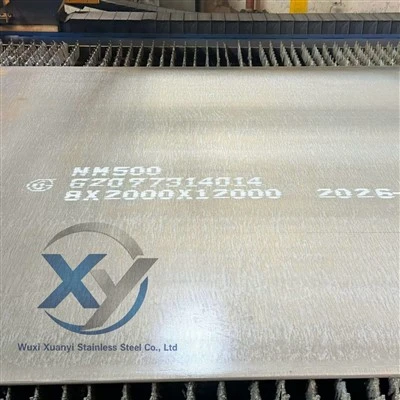
First, let’s get one thing straight: a stainless steel plate’s surface finish isn’t just about how it looks. While appearance is a huge factor for architectural and consumer-facing projects, finish directly impacts performance in ways that aren’t always obvious. Rough finishes, for example, trap dirt, bacteria, and food residue, which is why medical and food processing applications demand ultra-smooth surfaces. On the flip side, a matte, non-reflective finish is essential for parts that need to reduce glare in manufacturing environments, or for exterior structures that resist fingerprint smudges. The finish is also determined by how the plate is processed after fabrication, and it starts with the original mill surface—the finish the steel comes straight from the rolling mill with, before any additional finishing work. That base is the foundation for every other type of finish we offer as a supplier, so let’s start there.
The original mill finishes are the most fundamental, and often the most misunderstood, because they’re not visible to the naked eye at first glance, but they set the tone for everything that comes after. There are two main mill finishes: Mill Finish No. 1 and Mill Finish No. 2. No. 1 is the hot-rolled, annealed, and descaled finish that comes straight from the mill. It’s relatively rough, with a matte, slightly uneven texture, and it’s ideal for applications where appearance doesn’t matter, but strength and corrosion resistance do—like industrial tanks, chemical processing equipment, and structural supports that will be hidden or coated later. It’s also the most cost-effective base plate, which makes it a go-to for contractors working on budget-heavy industrial projects. The downside? Its rough surface makes it hard to clean, so it’s never used for food or medical use cases. Then there’s No. 2 Finish, which is split into No. 2D and No. 2B. No. 2D is a slightly smoother, duller mill finish, processed with light cold rolling and a mild acid pickle, used mostly for deep drawing applications—things like sinks, appliance components, or parts that need to be formed without cracking. No. 2B is the most widely used base finish, though it’s often mistaken for a final finish. It’s cold rolled, annealed, acid-pickled, and given a light final roll with polished rollers, so it has a smooth, bright, slightly reflective surface. It’s versatile enough to be used as-is, or to be polished further into a higher-end finish for architectural or decorative work.
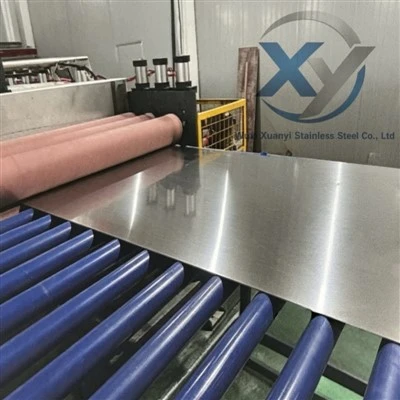
Once we move past the mill bases, we get into the finished surfaces that are tailored for specific performance or aesthetic needs. Let’s start with the most common final finishes you’ll encounter, and the projects they’re made for. The first is No. 4 Finish, also called a brushed finish—this is probably the one you recognize from kitchen appliances, elevator interiors, and residential backsplashes. It’s created by running the No. 2B base plate through abrasive belts, usually in one direction, to create a fine, linear grain pattern. The beauty of a No. 4 finish is that it hides scratches and fingerprints better than a higher polish, while still being smooth enough to wipe down easily. For a food processor or a restaurant kitchen, that’s a non-negotiable. I once worked with a small café chain that initially ordered a high-gloss polished plate for their new counter, but within three months, it was covered in smudges and required daily polishing. We swapped it for No. 4, and not only did it look consistent, it cut their maintenance time by 70%. The only downside? It’s not entirely corrosion-resistant in harsh outdoor environments, so it’s best for indoor or covered exterior use.
Next is the No. 8 Mirror Finish, the highest polish we offer, often used for architectural accents, decorative trim, and even watch components. It starts with a No. 2B base that’s polished with increasingly fine abrasive compounds, until it’s almost as reflective as a mirror—you can see your entire face in it, not just a blur. It’s stunning, but it comes with big tradeoffs. A No. 8 finish shows every single fingerprint, smudge, and scratch, so it’s only for areas that will be rarely touched and kept in low-traffic indoor spaces. I remember a project a few years back where a luxury hotel in downtown Toronto wanted No. 8 stainless steel plate for their lobby elevator doors. They insisted on it for that high-end, luxurious look, and we had to work closely with their maintenance team to create a strict cleaning schedule—no harsh cleaners, only microfiber cloths, and immediate touch-ups for any accidental scratches. It looked incredible, but it’s not a finish for every job.
For applications where hygiene is paramount—hospitals, pharmaceutical facilities, and food and beverage processing lines—we use No. 3 Finish, also called a polished finish, or sometimes an electropolished finish, though electropolishing is a separate process we’ll get to. No. 3 is a finer polish than No. 4, with a uniform, non-directional grain, and it’s extremely smooth, so it doesn’t trap bacteria, dust, or product residue. In fact, the FDA has specific guidelines for surface finish in food processing equipment, requiring a roughness of less than 0.8 micrometers, and electropolished finishes often meet that standard—they not only smooth the surface, they remove tiny imperfections and micro-burrs that can harbor contaminants. I once had a client run a test between a No. 4 and an electropolished plate for their dairy processing tanks. After six months of operation, swab tests showed the electropolished plate had 90% less bacteria buildup than the No. 4, which saved them hundreds of hours in cleaning and compliance audits. Electropolishing is also useful for parts that need to reduce friction, like moving components in machinery, because it eliminates rough edges that can cause wear.
Then there are the patterned finishes, for when you need a specific look or extra durability. One of the most popular is the checkered finish, often called tread plate. It has raised diamond or circle patterns on the surface, designed to add traction to floors, stair treads, and loading ramps. As a supplier, we make sure the checkered patterns are evenly spaced and the steel is still flat after the pattern is applied, because uneven tread plate is a safety hazard. We also offer embossed finishes, with custom patterns for architectural projects—things like leaf shapes, geometric designs, or brand logos, used for wall cladding, ceiling panels, or signage. These finishes add texture and visual interest, but they need to be considered carefully, because deep patterns can trap dust if used in dusty environments, so they’re not ideal for factory floors that process fine powders.
A lot of first-time customers ask me about “passivation,” and whether that’s a surface finish. It’s not, but it’s a critical process that works hand in hand with finish to improve corrosion resistance. Passivation is a chemical treatment that removes free iron and other contaminants from the surface of the stainless steel plate, allowing the chromium in the steel to form a protective oxide layer that makes it far more resistant to rust and corrosion. It doesn’t change the look of the plate, but it extends its lifespan by years, especially in outdoor or harsh chemical environments. I always recommend it to clients ordering plate for coastal areas, chemical plants, or any application where the steel will be exposed to moisture or corrosive substances.
Now, for all the talk about different finishes, there’s one common mistake I see suppliers (and customers) make: assuming a finish is universal across all stainless steel grades. For example, a No. 4 finish on 304 stainless steel is very different from a No. 4 finish on 316 stainless steel. 316 is molybdenum-alloyed, so it’s more corrosion-resistant, so its finished surface will hold up better in saltwater or chemical settings than 304. I always tell customers to match the finish to both the application and the grade of steel, not just pick a finish because it looks good. If you need a plate for a rooftop balcony in Miami, a No. 4 finish on 304 stainless will rust within a year, but a No. 4 finish on 316L with passivation will last for decades. That’s the kind of detail that comes from working with stainless steel plate day in and day out, and it’s why taking the time to get the finish right is worth the investment.
Another detail that’s often overlooked is roughness rating, measured in Ra (micrometers) or microinches. This is a numerical value that tells you how smooth the surface actually is, and it’s critical for applications with strict standards. For example, medical device parts might need an Ra of 0.2 or lower, while a kitchen counter can handle an Ra of 1.6. I always provide Ra values for every finish we offer, because a customer might say they want a “smooth” finish, but what one person considers smooth, another might consider too rough or too expensive. Using the Ra standard eliminates that guesswork.
If you’re a designer, engineer, or project manager sourcing stainless steel plate, here’s my best advice for choosing the right finish. First, ask two questions: What will this plate be exposed to, and what does it need to do? If it’s for a kitchen or food facility, prioritize hygiene—electropolished or No. 4 finish, make sure it meets FDA guidelines. If it’s for a luxury interior or a decorative project, consider if the area will see high traffic or frequent touch—if yes, No. 4 is more practical than No. 8. If it’s for outdoor use or coastal areas, go with a high-grade steel and passivation, and pair it with a finish that resists weathering. If it’s for industrial tanks or structural parts, Mill Finish No. 1 is the most cost-effective and functional.
At the end of the day, surface finish is the bridge between a stainless steel plate’s material properties and its real-world performance. It’s not just a cosmetic detail—it’s what makes a counter easy to clean, a stair tread safe to walk on, a medical device compliant with regulations, or an architectural structure that lasts 50 years. As a supplier, I don’t just sell plates— I help clients pick the right finish for their specific needs, whether that means explaining the difference between No. 2B and No. 4, or recommending passivation for a coastal project. If you’re planning a project and need help choosing the right stainless steel plate and surface finish, reach out to our team to discuss your requirements. We can walk through your application, provide samples of different finishes, and make sure you get a product that works as hard as you need it to.
Stainless Steel Welded Pipes and Tubes References:
- ASM International. (2020). Stainless Steel Surface Finishes and Their Applications. ASM Handbook, Volume 04: Nonferrous Alloys and Special-Purpose Materials.
- Food and Drug Administration (FDA). (2021). Sanitation of Equipment and Utensils for Food Processing. 21 CFR Part 110.
- Stainless Steel World. (2019). Surface Finishing for Stainless Steel: A Practical Guide. KCI Publishing B.V.
- International Organization for Standardization (ISO). (2018). Metallic Materials—Surface Roughness—Terms, Definitions and Surface Texture Parameters. ISO 4287:2018.
- National Association of Architectural Metal Manufacturers (NAAMM). (2022). Stainless Steel Finishes for Architectural Applications. NAAMM Standard 500.
Wuxi Xuanyi Stainless Steel Co., Ltd.
Wuxi Xuanyi Stainless Steel Co., Ltd. is one of the most professional stainless steel plate manufacturers and suppliers in China. With abundant experience, we warmly welcome you to wholesale bulk durable stainless steel plate made in China here from our factory. If you have any enquiry about cooperation, please feel free to email us.
Address: Room 1207, Building 11, Shengang Metropolis Plaza, No. 299 Fangcheng Avenue, Xinwu District, Wuxi City,China.
E-mail: jscherryxy@163.com
WebSite: https://www.xuanyisteel.com/
