Let’s talk about the hidden costs that come with buying an in-line viscometer—because as someone who’s spent 12 years selling, installing, and troubleshooting these tools for manufacturers across food and beverage, pharmaceutical, and specialty chemical industries, I can promise you this: the price tag on the device itself is never the full story. In-line Viscometer
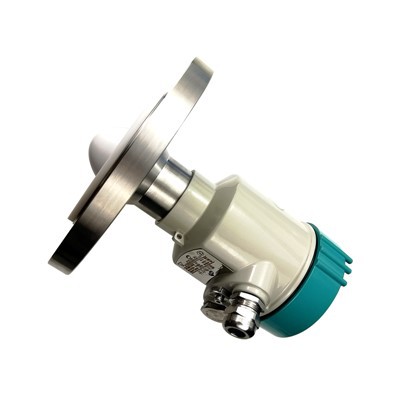
I still remember 2018, when a craft brewery in the Pacific Northwest reached out to us. They’d found a compact in-line viscometer online for $1,800, and they were ready to pull the trigger. But when their maintenance team started planning the installation, they realized they’d need more than just the device. By the time we wrapped up all the necessary work, that $1,800 viscometer had cost them nearly $7,000. That moment taught me that installation costs for in-line viscometers aren’t one-size-fits-all—they depend on your existing infrastructure, your process requirements, and how much prep work you’ve already done. I don’t want that to happen to you, so let’s break down every line item, the unexpected hurdles we see all the time, and how to plan for them before you sign on the dotted line.
First, let’s start with the basics: most in-line viscometers aren’t “drop-in” devices. They’re precision instruments designed to measure fluid viscosity in real time, whether that’s monitoring chocolate texture during tempering, checking battery slurry consistency, or confirming the purity of a vaccine formulation. So right out the gate, you’re looking at three core categories of installation costs: hardware modifications, calibration and validation, labor, and ongoing compliance checks. Let’s dive into each with real examples from my team’s work.
Hardware Modifications: The Costs No Online Product Page Mentions
Let’s start with the most variable part of installation: adapting the viscometer to your process line. In-line viscometers come in two main mounting styles—insertion and inline (for full pipe runs)—and most facilities don’t have a ready-made port for either.
For insertion viscometers, which are the most common for smaller pipe diameters (2 inches or less), you need a sample tap. That means cutting into your process pipe, welding or threading a connection point, and adding isolation valves so you can service the viscometer without shutting down the entire line. For a standard 2-inch stainless steel pipe, that job alone costs between $800 and $1,500. Last year, a pharmaceutical client making injectable antibiotics had 12 lines to upgrade, and those taps added $12,000 to their installation budget. That’s not a line item they saw when they compared base device prices.
Then there’s sample conditioning, which is non-negotiable for 90% of industrial processes. Viscometers don’t work well with unfiltered fluids, extreme temperatures, or pressure fluctuations. If your product has particulates—think fruit puree, latex paint, or polymer solutions—you’ll need a filter to keep debris from clogging the viscometer’s sensor. For high-temperature processes (like cooking syrups or molten plastics), you might need a heat exchanger to bring the fluid to the viscometer’s optimal operating range, plus insulated tubing to maintain temperature during transport. A basic sample conditioning skid for a food and beverage line runs $2,000 to $5,000, and for a chemical processing line with corrosive fluids, that number jumps to $7,000 to $10,000 because you need exotic materials like Hastelloy or PTFE. I once worked with a battery manufacturer whose lithium slurry corroded standard carbon steel parts; they had to replace all sample lines with PTFE, adding $4,500 to their installation cost.
Power and data connectivity is another hardware cost that trips people up. Most in-line viscometers require 24V DC power, but if your line only has 120V AC, you’ll need a power converter. Even more critical is data integration—your viscometer needs to talk to your SCADA or distributed control system (DCS) to feed real-time viscosity data to your operators. That means running shielded Ethernet cable (standard copper will pick up electrical interference from motors and pumps, leading to bad data) and programming Modbus or OPC UA protocols. For a facility with an existing DCS, that’s a $1,000 to $2,500 line item; if you need to build custom integration, that can double or triple. A specialty chemical plant in Texas had to integrate three new viscometers into a legacy DCS, and that integration work alone cost them $8,200, not including the device price.
Labor Costs: It’s Not Just Screwing It In
Hardware is only half the battle; labor costs are where a lot of our customers underestimate their budget. Installation labor breaks down into three parts: electrical work, piping work, and calibration.
Electrical work is non-negotiable for industrial facilities. You can’t just run a random power line to a precision instrument—you need a licensed electrician to pull power, install junction boxes, and test for signal integrity. For most standard installs, that’s 4 to 8 hours of electrician time at $100 to $150 an hour, so $400 to $1,200. But if you have to run cable 50+ feet to your control panel, or add surge protectors to guard against voltage spikes (which fry viscometer sensors all the time), that time doubles.
Piping labor is another big one. Cutting, threading, and welding pipe isn’t a job for your average maintenance tech—especially if you’re working on sanitary lines for food or pharma, which require specialized sanitary fittings and no crevices where bacteria can grow. A certified sanitary pipe fitter charges $120 to $180 an hour, and a basic 2-inch tap job takes 2 to 4 hours, so $240 to $720. For a 6-inch process line, that’s 6 to 8 hours, or $720 to $1,440. Last quarter, we installed three viscometers at a craft distillery that uses sanitary 3-inch lines, and the piping labor cost was $2,100 for three units.
Then there’s calibration and validation. This is where installation shifts from a hardware project to a quality project, especially for regulated industries like pharma or medical devices. Most in-line viscometers come pre-calibrated from the factory, but that calibration is only valid for their original test fluid. To get accurate readings for your specific product, you need on-site calibration using your actual process fluid, plus documentation for your quality team. For non-regulated industries like craft beverage or specialty chemical manufacturing, calibration is a $300 to $500 one-time cost. But for pharma or food safety regulated by the FDA, you need formal calibration certificates, maybe even validation protocols per 21 CFR Part 11, which adds $1,500 to $3,000 per unit. A biotech client we worked with last year had to install 5 viscometers for a monoclonal antibody formulation line, and the calibration and validation work cost them $12,000 on top of the device price.
The Hidden Surprises: Compliance, Downtime, and After-Sale Prep
I’d be doing you a disservice if I didn’t talk about the hidden costs that most customers don’t plan for until it’s too late. The first one is compliance and documentation. For regulated industries, every part of the installation needs to be tracked: installation reports, calibration records, validation logs, and training materials for your operators. That’s not just paperwork—our team has worked with clients who spent $2,000 to $4,000 on a third-party auditor to review their installation documentation to ensure it meets FDA or EU GMP standards.
Then there’s downtime. When you install a new instrument on a process line, you have to shut down that line for a few hours at minimum. For a food plant running 24/7, a single hour of downtime can cost $10,000 to $20,000 in lost production. A petrochemical plant? That downtime can be $50,000 an hour or more. When we installed six viscometers at a corn syrup processing plant in Iowa, we scheduled the work during their annual planned shutdown, which saved them $45,000 in unplanned downtime, but that’s a luxury not every facility has. One of our smaller beverage customers tried to install a viscometer on a packaging line during a production run, and the installation took twice as long as expected, leading to 2 hours of unplanned downtime that cost them $18,000. That’s a cost no one budgets for.
Finally, don’t forget operator training. A viscometer is only as good as the people using it. If your team doesn’t know how to pull samples, interpret data, or perform basic maintenance like cleaning the sensor, you’ll get bad readings, missed process issues, and premature sensor failure. Basic on-site training is included with most of our installations, but if you need advanced training for your maintenance or quality teams, that’s an extra $500 to $1,500 per session. A personal care products client we worked with last year skipped training, and their operators accidentally damaged the viscometer’s sensor during a cleaning, costing $1,200 in a replacement part and another $800 in labor to install it—all because they didn’t know the proper cleaning protocol.
How to Avoid Cost Overruns: Plan Before You Buy
After 12 years in this business, I’ve seen dozens of clients blow their installation budgets because they didn’t ask the right questions upfront. Here’s what I tell every potential customer before they commit to an in-line viscometer:
First, audit your existing infrastructure. Before you even pick a viscometer, map out your process lines: what pipe size, material, and pressure/temperature are you working with? Do you have power and data connectivity within 10 feet of where you want to install the viscometer? For example, if you have a 2-inch sanitary line with a nearby control panel, your installation will be far cheaper than if you have a 6-inch carbon steel line 50 feet from your power source.
Second, define your regulatory requirements. If you’re in pharma, food and beverage, or medical devices, you’ll need validation and calibration documentation, so budget for that upfront. If you’re in a low-regulation industry like custom chemical manufacturing, you can skip the formal audit, but you still need to calibrate for your specific fluid.
Third, plan for downtime. Don’t schedule installation during peak production. Even a small unplanned delay can eat into your budget way more than the cost of scheduling work during a planned shutdown.
Last, ask for a custom quote, not a generic price. A lot of vendors will give you a base device price, but they won’t tell you about the sample conditioning, integration, or calibration costs until after you buy. Our team always provides a full, line-item installation quote before we even send a sales rep to your facility—no surprises, no hidden fees.
By the way, that craft brewery I mentioned earlier in 2018? They didn’t work with us at first. They went with a different vendor who only quoted the $1,800 device, and they ended up spending $6,800 on installation, calibration, and downtime. Six months later, they reached out to us to replace that first viscometer, and this time, we walked them through every cost upfront. Their total installation was $5,200, $1,600 less than their first job, because we were able to reuse some of their existing sample lines and power infrastructure. They still use that viscometer today, and it’s helped them cut chocolate spoilage by 12% by catching viscosity spikes during tempering before they ruined full batches.
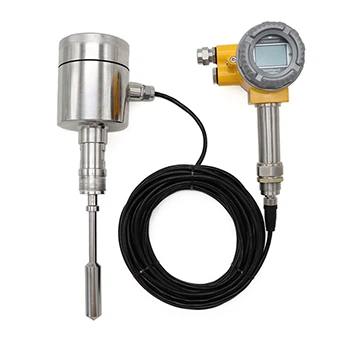
That’s the real value of an in-line viscometer, right? It’s not just a tool to measure viscosity—it’s a way to reduce waste, improve product quality, and save money. But only if you plan for the full cost, including installation, not just the device itself.
Guided Wave Radar Level Meter If you’re ready to get a clear, no-surprise installation quote for an in-line viscometer tailored to your process, feel free to reach out to our team to discuss your specific needs. We’re here to help you every step of the way, from selecting the right viscometer for your application to making sure the installation goes smoothly and on budget.
References
- Viscosity Technology Association. (2020). Industrial In-Line Viscometer Installation Best Practices. VTA Technical Report Series.
- International Society of Automation. (2021). Integration of Precision Process Instruments into Industrial Control Systems. ISA-95 Standard.
- U.S. Food and Drug Administration. (2022). Quality System Regulation (21 CFR Part 11): Calibration and Validation Requirements for Process Instruments. FDA Center for Devices and Radiological Health.
- Manufacturing Extension Partnership. (2019). Cost Analysis of Precision Instrument Installation for Food and Beverage Processing Facilities. NIST MEP Publication 19-003.
Shandong Aipuxin Automation Instrument Co., Ltd.
Shandong Aipuxin Automation Instrument Co., Ltd. is one of the most professional in-line viscometer manufacturers and suppliers in China, specialized in providing high quality customized service. We warmly welcome you to wholesale cheap in-line viscometer in stock here from our factory. For price consultation, contact us.
Address: Huigu Phase 1, Zhongnan High-tech Canal New City, Rencheng District, Jining City, Shandong Province
E-mail: aipuxin0124@gmail.com
WebSite: https://www.aipxin.com/
