If you’ve ever swapped out your old halogen headlights for LED bulbs, you’ve probably spent hours watching YouTube tutorials, reading forum threads, and wondering: Do LED headlight bulbs require a special relay? As a supplier who’s worked with car enthusiasts, independent mechanics, and fleet managers for over a decade, this is the question I get more than any other — and it’s one that’s way more nuanced than most people think. Let’s break this down without the jargon, because the last thing anyone needs is to burn out a new set of LEDs or fry their car’s electrical system over a relay mix-up. LED Headlight Bulb
First, let’s start with what a headlight relay does, because that’s the foundation of the question. For decades, halogen headlights ran on a simple circuit: a light switch in your dashboard sends a small electrical current to a relay, which then sends a much larger current directly to the bulbs. Why the relay? Halogens draw a lot of power — usually 55 watts per bulb, which means they need around 4.5 amps each — but if that 4.5 amps ran through the light switch itself, it would eventually wear out the switch’s contacts. The relay acts like a middleman: it lets the small switch current trigger the big bulb current, so your steering-column switch stays safe and lasts longer. That setup worked for halogens, but LEDs are different, right?
Here’s where the confusion sets in. Most modern LED headlight bulbs draw way less power than halogens — often 15 to 20 watts per bulb, or 1.25 to 1.7 amps total. That small draw leads a lot of people to think: “If the bulbs don’t need much power, I can just skip the relay and wire them straight to the headlight switch.” I get that instinct — it’s cheaper, faster, and feels like a no-brainer. But that’s where problems start, especially in older vehicles.
Older cars (pre-2000, roughly) were engineered exclusively for halogen bulbs, and their headlight circuits are built to handle that high wattage. When you plug in low-power LEDs, two common issues pop up: hyperflash or error codes. Wait, hyperflash is usually for turn signals, but it happens with headlights too? Sort of — hyperflash is when a light bulb’s fast blink rate signals a problem, but for headlights, it’s often called “flickering.” The low power draw of LEDs doesn’t register to the factory circuit’s sensors, which are calibrated for halogens. Some cars throw an error code on their dashboard, others make the headlights flicker randomly when you hit bumps, and a few even shut off unexpectedly because the circuit thinks something is wrong.
So does that mean you need a special relay for all LEDs? No — but it depends on two big factors: your car’s age, and the LED bulb’s design. Let’s split this into two groups to make it clear. For newer vehicles (2005 and up, especially those with CAN bus systems), many LED headlight bulbs are built with “canbus-ready” technology. Canbus is the computer system that monitors your car’s electrical components, and canbus LEDs have tiny modules built into them that mimic the power draw of halogens, so the circuit doesn’t throw an error. For these, you almost never need a relay — the factory setup works fine. I’ve sold tens of thousands of these canbus LEDs, and only a tiny fraction of buyers (maybe 1% across all makes) have issues, usually because they installed non-compatible bulbs from a no-name brand that skipped the canbus module to cut costs.
Now, for older vehicles (pre-2005, no CAN bus, or classic cars), or even newer cars that don’t play nice with cheap LEDs, a relay can solve multiple problems — but not a “special” relay, at least not in the way most people think. A lot of suppliers will try to sell you a $20 “LED-specific relay” as a upgrade, but more often than not, a standard 4-pin or 5-pin automotive relay rated for 10 amps works just as well. The job of the relay here isn’t to handle the LED’s power — it’s to bypass the old, worn-out factory headlight wiring that’s often corroded or weakened after 10+ years. Old wiring can’t handle even the moderate power of some high-output LEDs, so adding a relay lets you run a new, thicker wire directly from the battery to the LED bulbs, skipping the old, faulty factory circuit entirely. That’s the real job people need a relay for, not because the LED itself is incompatible.
Wait, let’s test that with a real example. Last year, a customer from Texas reached out to me about his 1998 Ford F-150. He’d installed a set of our high-power LED headlights, and they kept flickering every time he drove down a dirt road. He’d tried replacing the bulbs, the switch, even the fuses, but nothing worked. When he brought the truck into our shop (we’ve got a small service area for local customers), we checked the factory wiring: it was 20-year-old thin copper wire, covered in dust and corrosion, so it couldn’t carry the steady current the LEDs needed. We installed a standard 40-amp relay (plenty for the LEDs, which only draw 1.5 amps each) and ran new 12-gauge wire from the battery to the bulbs. The flickering stopped immediately. He didn’t need an “LED-specific” relay — he just needed a relay to bypass the bad old wiring.
Another common myth: some people think LEDs need a relay because they’re more sensitive to voltage spikes. That’s partially true, but the voltage spikes from a car’s alternator are manageable for high-quality LEDs. The only time a relay helps here is if your car’s original relay is worn out — a new standard relay will stabilize the current better than a 20-year-old one, not because it’s made for LEDs. I’ve had customers come back with issues after buying cheap LED relays that failed within a month, because they were made with low-quality plastic and contacts. Stick to a standard automotive relay rated for at least 10 amps, and you’re set.
Now, let’s talk about the exceptions, because there are a few cases where you do need a special type of relay. If you’re using ultra-high-power LED headlight bulbs — the ones that draw 30 watts or more, for off-road use or custom builds — you’ll need a relay rated for the full wattage. Most standard relays are 30 or 40 amps, which is more than enough for even the highest-output LEDs. But if you’re wiring multiple sets of LED headlights (say, main plus auxiliary lights), you’ll need a heavier-duty relay to handle the combined power. That’s not LED-specific, though — it’s just a matter of matching the relay’s rating to your total power draw.
A lot of new LED suppliers will overcomplicate this to upsell products. I’ve seen listings for “LED headlight relay kits” that add extra modules, fuses, and wiring harnesses, and most of the time, those are unnecessary for standard use. The only time those kits make sense is if you’re doing a custom build, or your car’s wiring is so damaged that even a basic relay won’t help. For most people, a good set of canbus LED bulbs and a standard relay (if needed) is all you need.
Wait, what about error codes? If your 2018 Honda Civic throws a “headlight fault” code after installing LEDs, that’s almost never a relay issue. It’s almost always because you bought non-canbus bulbs, or you didn’t seat the bulbs properly in the headlight housing. I’ve had a customer with a 2020 Toyota RAV4 who bought cheap LEDs from a big-box store, and they threw an error code. He returned them, bought our canbus-ready LEDs, and the code disappeared — no relay needed. That’s why buying from a reputable supplier matters: we test every LED bulb for compatibility with major makes and models, so you don’t have to guess if it’ll work with your car’s CAN bus system.
Let’s wrap this up with a clear, actionable guide, because that’s what most people are looking for. First, check your vehicle’s age and system: if it’s a 2005 or newer, and you buy canbus-ready LED bulbs, you almost certainly don’t need a relay. If it throws an error code, double-check that the bulbs are seated correctly — that fixes 80% of those issues. If you drive a pre-2005 vehicle, or your newer car has persistent flickering that you’ve tried to fix with bulbs and switches, a standard 30-amp automotive relay will usually solve the problem. You don’t need an “LED-specific” relay — just a good, reliable one.

As someone who’s been in this business for years, I’ve seen too many people waste money on unnecessary parts because they listened to marketing hype. The last thing I want is for a customer to buy an overpriced LED relay kit when a $10 standard relay would do the same job. That’s why I’m always honest about this: no, LEDs don’t inherently need a special relay — the question comes down to your car’s age, your bulb’s design, and the condition of your existing wiring.
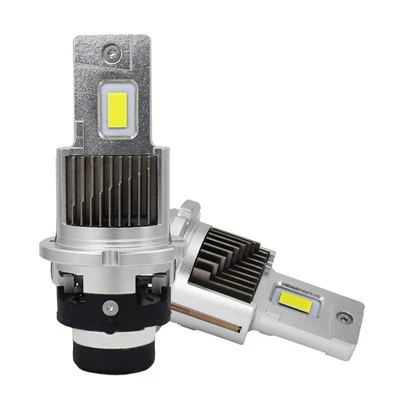
D Series LED Headlight Bulb If you’re still unsure whether you need a relay for your LED headlight bulbs, or you’re shopping for a reliable set that’s compatible with your vehicle, feel free to reach out to our team to discuss your specific vehicle and setup. We’ve helped thousands of customers across all makes and models get the right LED headlights without unnecessary costs.
References
- Society of Automotive Engineers (SAE) International. (2019). "Electrical System Compatibility for LED Automotive Lighting." SAE International Journal of Passenger Cars – Electrical and Electronic Systems.
- Automotive Aftermarket Industry Association (AAIA). (2021). "LED Headlight Installation Best Practices for Classic and Modern Vehicles." AAIA Technical Bulletin.
- Bosch Automotive. (2020). "Relay Selection Guide for Automotive Lighting Systems." Bosch Automotive Electrical Systems Documentation.
- International Organization for Standardization (ISO). (2018). "ISO 15031-5: Road Vehicles – Communication between Vehicle and External Equipment – Part 5: OBD-II Services for Lighting Systems." ISO Standards.
Shine Bright Optoelectronic Co., Ltd.
As one of the most professional led headlight bulb manufacturers in China, we also accept customized orders. Please feel free to buy bulk advanced led headlight bulb in stock here from our factory. Welcome to contact us for quotation.
Address: 6th Floor, Buildings B & C, Baotang Industrial Zone, No. 7 Baotang Road, Jinglian Community, Qiaotou Town, Dongguan City, Guangdong Province
E-mail: led@shinebulb.com
WebSite: https://www.shinebulb.com/
