If you’ve ever stood at the base of a towering wind turbine watching blades spin silently in the Atlantic breeze, or glanced up at a sprawling solar farm stretching across arid desert terrain, you’ve probably wondered how all that clean energy gets from those remote sites to the grid that powers our homes. What you might not see is the unsung hero behind every reliable renewable energy operation: specialty cables. As a supplier focused exclusively on custom-designed cables for renewable energy projects, I’ve spent over a decade learning that standard off-the-shelf cables simply can’t handle the extreme conditions, unique demands, and long lifecycles required for wind, solar, hydro, and emerging renewable technologies. Today, I want to break down the key specialty cables our team engineers, and why they’re non-negotiable for making the energy transition work. Specialty Cables
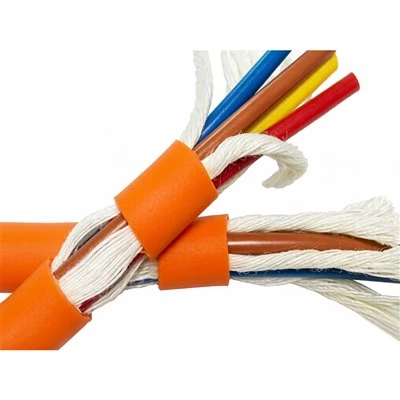
First, let’s talk about wind energy—one of the fastest-growing renewable sectors, with onshore and offshore installations pushing the limits of what cables can endure. Wind turbines operate in some of the harshest environments on Earth: offshore turbines sit in saltwater, battered by constant waves and corrosive salt spray, while onshore models handle extreme temperature swings, from freezing winters in the Great Plains to scorching summers in the Texas Panhandle. Then there’s the mechanical stress: turbine blades spin at up to 180 rpm, causing the tower’s cable runs to flex and twist thousands of times a year. This is where two of our most critical products come in: offshore submarine power cables and turbine interconnection cables.
Submarine power cables for offshore wind farms aren’t your typical underwater cable. They’re multi-layered, designed to resist water pressure at depths of up to 500 meters, prevent corrosion from saltwater, and carry high-voltage power—often 66 kV or higher—from the turbine array to the offshore substation. Our cables include a thick, cross-linked polyethylene (XLPE) insulation layer that’s far more durable than standard PVC, plus a steel armor sheath that protects against abrasion from seabed rocks and damage from fishing equipment or marine life. We also integrate a redundant fiber optic core within each cable run, which isn’t just for communication—many of our clients use the fiber to monitor cable health in real time, detecting tiny stress fractures or insulation degradation before they cause a failure. Offshore wind farms are often 100+ miles from shore, so a cable failure can cost tens of thousands of dollars a day in lost energy production; that’s why our team tests every submarine cable in our in-house lab, simulating 20 years of underwater stress and corrosion before it ever leaves our warehouse.
For onshore wind turbines, the interconnection cables that run from the base of the tower to the nacelle (the unit housing the generator) are just as specialized. These cables are built for constant movement: every time the turbine’s yaw system turns to face the wind, the cable twists, and every gust of wind pulls at its length. Standard flexible cables would crack or fail after just a few thousand flex cycles, but our turbine interconnection cables use a copper conductor with multiple fine strands (a “stranded flexible” design) and a thermoplastic elastomer (TPE) outer jacket that can withstand up to 10 million flex cycles at temperatures ranging from -40°C to 90°C. We also add a UV-resistant layer to these cables, since they’re often run along the exterior of the tower and exposed to direct sunlight for decades. Last year, a client in Oklahoma told us that our cables cut their turbine downtime by 70% compared to the standard cables they’d used before—proof that specialty design makes a tangible difference.
Next, solar energy—the other giant in renewable power. Utility-scale solar farms, rooftop solar arrays, and even floating solar installations all have unique cable needs that standard solar cables can’t meet. Let’s start with utility-scale solar, which often covers hundreds of acres in remote, sunny locations. These farms rely on two main cable types: DC array cables that connect individual solar panels to inverters, and AC collection cables that carry power from the inverters to the grid. What’s unique here is that these cables are exposed to constant UV radiation, extreme heat (solar panels can reach 70°C or more on hot days), and often buried in dry, dusty soil that’s abrasive and sometimes acidic.
Our solar DC array cables are engineered for exactly these conditions. We use a cross-linked polyolefin (XLPO) insulation that’s more UV-stable than PVC, with a specially formulated outer jacket that resists abrasion from being pulled through conduit or laid directly in shallow burial trenches. We also design these cables to handle the low-voltage, high-current DC flow from solar panels—something standard electrical cables aren’t optimized for. For floating solar farms, which are installed on reservoirs or lakes, we have a line of water-resistant DC cables that can sit partially submerged without corroding, plus we add a slight buoyancy to the cable jacket to make installation easier, since technicians don’t have to pull heavy cables through deep water. Last year, we supplied cables to a floating solar project in Singapore that operates in saltwater, and our cables have outlasted the client’s initial 5-year warranty by three years—all without signs of corrosion.
Another underdiscussed area for solar is medium-voltage cable for string inverters and grid interconnection. As solar farms grow larger, they need cables that can carry higher voltages (up to 35 kV) with minimal energy loss. Our medium-voltage solar cables use high-purity copper conductors to reduce resistive loss, which means more of the energy generated by the panels actually reaches the grid. We also test these cables for partial discharge—tiny electrical leaks that can build up over time and cause insulation failure—a common issue in solar installations where temperature swings are extreme. For rooftop solar, meanwhile, we offer smaller, lightweight DC cables that are easy for installers to run along rooflines, with a fire-resistant outer layer that meets strict building codes for residential and commercial properties.
Beyond wind and solar, hydro energy is another key renewable sector that relies on specialty cables, and it’s a totally different set of challenges. Hydroelectric dams, run-of-river projects, and tidal energy systems operate in freshwater, fast-moving water, or even saltwater for tidal projects, and their cables have to resist water ingress, pressure, and exposure to chemicals used for dam maintenance. For submersible pumps and generators in hydro turbines, we manufacture wet-mateable cables that can connect and disconnect underwater without leaking—critical for technicians who need to service equipment without draining the turbine. These cables have a special gel-filled insulation that prevents water from seeping into the conductor, and their connectors are designed to create a watertight seal even at depths of 100 meters. For dam control systems, which rely on sensor data to manage water flow, we also offer hybrid cables that combine power conductors for sensor devices with fiber optic cables for high-speed data transmission—all in one compact cable, so clients don’t have to run multiple lines through tight dam conduits.
As the renewable energy sector evolves, we’re also developing specialty cables for emerging technologies: long-duration energy storage (LDES) systems, green hydrogen production, and even geothermal energy. LDES facilities, which store excess solar or wind energy for use when the sun isn’t shining or the wind isn’t blowing, require cables that can handle high charge and discharge currents, often in extreme temperatures. Our team is currently working on custom cables for a battery storage project in Germany, designed to operate in temperatures from -20°C to 50°C, with a heat-resistant outer jacket that can withstand the heat generated by high-power batteries. For green hydrogen electrolyzers, which split water into hydrogen and oxygen using renewable energy, we have cables that resist the corrosive effects of hydrogen gas—something standard copper cables can’t do, because hydrogen can cause metal embrittlement. Our electrolyzer cables use a special alloy conductor and a fluoropolymer insulation that’s impermeable to hydrogen, extending the cable’s lifecycle by decades.
Now, I want to be clear: not all renewable projects need the same cables. A small rooftop solar installation for a home might only need our lightweight DC array cables, while a 500 MW offshore wind farm needs submarine cables engineered to withstand 20 years of harsh marine conditions. That’s why our team works closely with every client to conduct a site assessment, identify the specific stressors their cables will face, and design a custom cable solution. We don’t just sell cables—we provide a end-to-end solution that includes installation guidance, real-time health monitoring for critical assets, and warranty support tailored to the project’s lifecycle.
But here’s a common misconception I hear from new clients: specialty cables are more expensive than standard ones. While the upfront cost might be slightly higher, the long-term savings are massive. A standard cable for an offshore wind turbine might fail every 5 years, costing $50,000 in replacement and lost revenue. Our specialty cables last 25 years, with minimal maintenance, so the total cost over the project’s lifecycle is actually lower. We’ve done the math for dozens of clients, and the ROI on our specialty cables typically pays for itself within 7 years.
The global push for net-zero carbon emissions means renewable energy is only going to grow faster—by 2030, the International Energy Agency says renewable energy will account for 30% of global electricity generation, up from 20% today. That growth will depend not just on building more wind turbines and solar panels, but on the cables that connect them to the grid. Every time a new wind farm is built, a solar array goes online, or a hydro turbine is installed, specialty cables are the invisible foundation that makes it reliable.
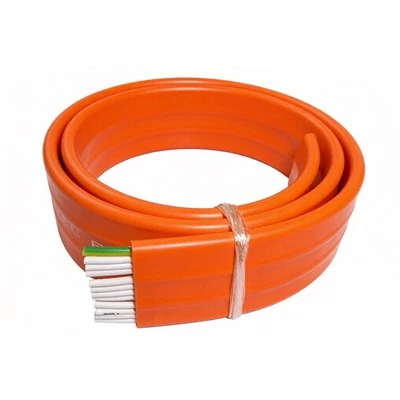
If you’re working on a renewable energy project and you’re tired of dealing with cables that fail prematurely, don’t settle for off-the-shelf products. Our team has the expertise to design, test, and manufacture specialty cables tailored to your site’s unique demands. Whether you’re planning an offshore wind farm, a utility-scale solar project, a hydroelectric facility, or an emerging technology like long-duration storage or green hydrogen, we can provide the cables that will keep your operation running efficiently for decades. To discuss your project requirements and find the right cable solution for you, reach out to our team to start a conversation. Together, we can build a more reliable renewable energy future.
Flat Cables References
- International Energy Agency. (2023). Global Renewables Outlook: Energy Transition 2030.
- American Wind Energy Association. (2022). Offshore Wind Cable Durability and Performance Standards.
- Solar Energy Industries Association. (2023. Utility-Scale Solar Cable Specification Guidelines.
- International Electrotechnical Commission. (2021). IEC 60502-2: Power Cables for Rated Voltages Above 1 kV Up to and Including 30 kV.
Anhui Yuantong Cable Co., Ltd.
As one of the most professional specialty cables manufacturers and suppliers in China, we offer a wide range of cables with superior quality. Please feel free to wholesale bulk customized specialty cables from our factory. Also, pricelist is available.
Address: Yongfeng Industrial Park, Tianchang City, Anhui Province
E-mail: ahytcable@126.com
WebSite: https://www.yuantongcable.net/
