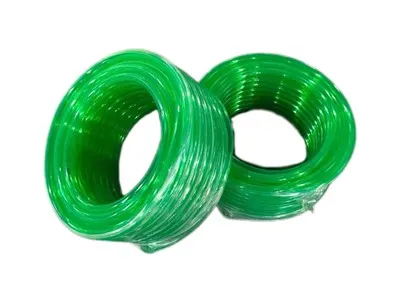
Yo, I’m a supplier of flexible PVC hoses. You might be wondering, "What the heck is the hardness of a flexible PVC hose?" Well, let me break it down for you. Flexible PVC Hose
Understanding PVC Hose Hardness Basics
First off, hardness is a big deal when it comes to flexible PVC hoses. It refers to how resistant the hose is to indentation, abrasion, and deformation. In simple terms, a harder hose is less likely to get scratched up or dented easily, while a softer one can bend more freely and adapt to different shapes.
The hardness of PVC hoses is usually measured on the Shore durometer scale. There are different types of Shore scales, but for flexible PVC hoses, the Shore A scale is the most commonly used. The Shore A scale ranges from 0 to 100. A lower number on the Shore A scale means the hose is softer and more flexible. For example, a hose with a Shore A hardness of 40 is going to be super bendy, almost like a rubber band. On the other hand, a hose with a Shore A hardness of 90 is much stiffer and more rigid.
Why Hardness Matters
Now, you might be thinking, "So what? Why does the hardness of a flexible PVC hose even matter?" Well, it matters a whole lot, especially depending on how you’re going to use the hose.
For Industrial Applications
In industrial settings, the hardness of the hose can determine its durability. If you’re using the hose in a place where it’s going to be constantly rubbed against rough surfaces or exposed to high – pressure fluids, a harder hose is the way to go. For instance, in a chemical plant, you need a hose that can withstand the abrasion from chemical transfer pipes and the pressure of the chemicals flowing through it. A hose with a higher Shore A hardness, say around 70 – 80, is better suited for this kind of situation. It can resist wear and tear better and has a longer lifespan, which saves you money in the long run.
For Home and Garden Use
When it comes to home and garden applications, a softer hose is usually more popular. Think about watering your plants. You want a hose that you can easily wind around corners, connect to different sprinklers, and move around without much hassle. A hose with a Shore A hardness of around 50 – 60 is perfect for this. It’s flexible enough to bend and twist, but still strong enough to hold up to normal use. You don’t have to worry about it cracking or breaking when you’re trying to maneuver it in your yard.
Factors Affecting PVC Hose Hardness
A bunch of things can affect the hardness of a flexible PVC hose.
Plasticizers
Plasticizers are chemicals that are added to PVC to make it more flexible. The more plasticizers you add, the softer the hose will be. When manufacturers produce PVC hoses, they can adjust the amount of plasticizers to achieve the desired hardness. For example, if they want to make a really soft, flexible hose for a home use, they’ll add a larger amount of plasticizers. But if they’re making a hose for industrial use where more rigidity is required, they’ll use less plasticizer.
Temperature
Temperature also plays a huge role in the hardness of PVC hoses. PVC is a thermoplastic, which means its properties change with temperature. In cold weather, a PVC hose will become harder and more brittle. You might have noticed this if you’ve tried to use a hose in the winter. It’s much stiffer and more difficult to bend. On the other hand, in hot weather, the hose will become softer and more pliable. This is important to keep in mind when you’re choosing a hose for different climates. If you live in a cold area, you might want a hose with a slightly lower hardness to start with so that it doesn’t become too rigid in the winter.
Additives
There are also other additives that can be used in PVC hoses to affect hardness. For example, some additives can increase the hose’s resistance to UV radiation. When a hose is exposed to sunlight for a long time, the UV rays can break down the PVC and make it harder and more brittle over time. By adding UV – resistant additives, the hose can maintain its flexibility and hardness for a longer period, even when it’s outside in the sun.
How We Ensure Quality Hardness in Our Hoses
As a supplier of flexible PVC hoses, we take the hardness of our hoses very seriously. We have a strict quality control process in place.
First of all, we work with top – notch raw material suppliers. We make sure that the PVC resin and plasticizers we use are of the highest quality. We test the raw materials before we start the manufacturing process to make sure they meet our standards.
During the manufacturing process, we use advanced equipment to precisely control the amount of plasticizers and additives. Our production team monitors the process closely to ensure that the hardness of the hoses is consistent. We also conduct regular quality checks on the finished hoses. We use a Shore durometer to measure the hardness of the hoses at different points to make sure they fall within the specified range.
If the hardness of a batch of hoses is not up to our standards, we don’t hesitate to re – process or scrap them. We believe that providing high – quality hoses with the right hardness is the key to our customers’ satisfaction.
Choosing the Right Hardness for Your Needs
When you’re in the market for a flexible PVC hose, choosing the right hardness is crucial. Here are some tips to help you make the right decision.
Consider the Application
As I mentioned earlier, the type of application is the most important factor. If it’s for an industrial application, you’ll generally need a harder hose. If it’s for home or garden use, a softer one is usually better.
Think About the Environment
Consider the environment where the hose will be used. If it’s going to be exposed to extreme temperatures, choose a hose that can handle those conditions. For example, if it’s going to be used in a very hot and sunny place, look for a hose with UV – resistant additives and a hardness that can withstand the heat.
Check the Manufacturer’s Specifications
Always check the manufacturer’s specifications for the hose. They should clearly state the Shore A hardness of the hose. If you’re not sure about what hardness is right for you, you can also contact the manufacturer (like us!) and ask for advice.
Conclusion
So there you have it, folks. The hardness of a flexible PVC hose is a crucial factor that can affect its performance, durability, and suitability for different applications. Whether you’re using it in an industrial setting or in your home garden, understanding the concept of hardness and how to choose the right one is key.
Water Hose If you’re in the market for high – quality flexible PVC hoses and want to discuss the best hardness for your specific needs, feel free to reach out. We’re here to help you make the right choice and get the hose that works best for you.
References
- "Plastic Materials Handbook" by Brian M. Walker
- "Polyvinyl Chloride (PVC) Technology" by W. V. Titow
Weifang Xinzhiyuan Plastic Co., Ltd.
As one of the most experienced flexible pvc hose manufacturers and suppliers in China, we offer a wide range of products with superior quality. Please feel free to wholesale premium flexible pvc hose made in China here from our factory. We also accept customized orders.
Address: No. 700, Tongle Street, Economic Development Zone, Changle County, Weifang City, Shandong Province
E-mail: hua@xzypvchose.com
WebSite: https://www.pvchose-xzy.com/
